
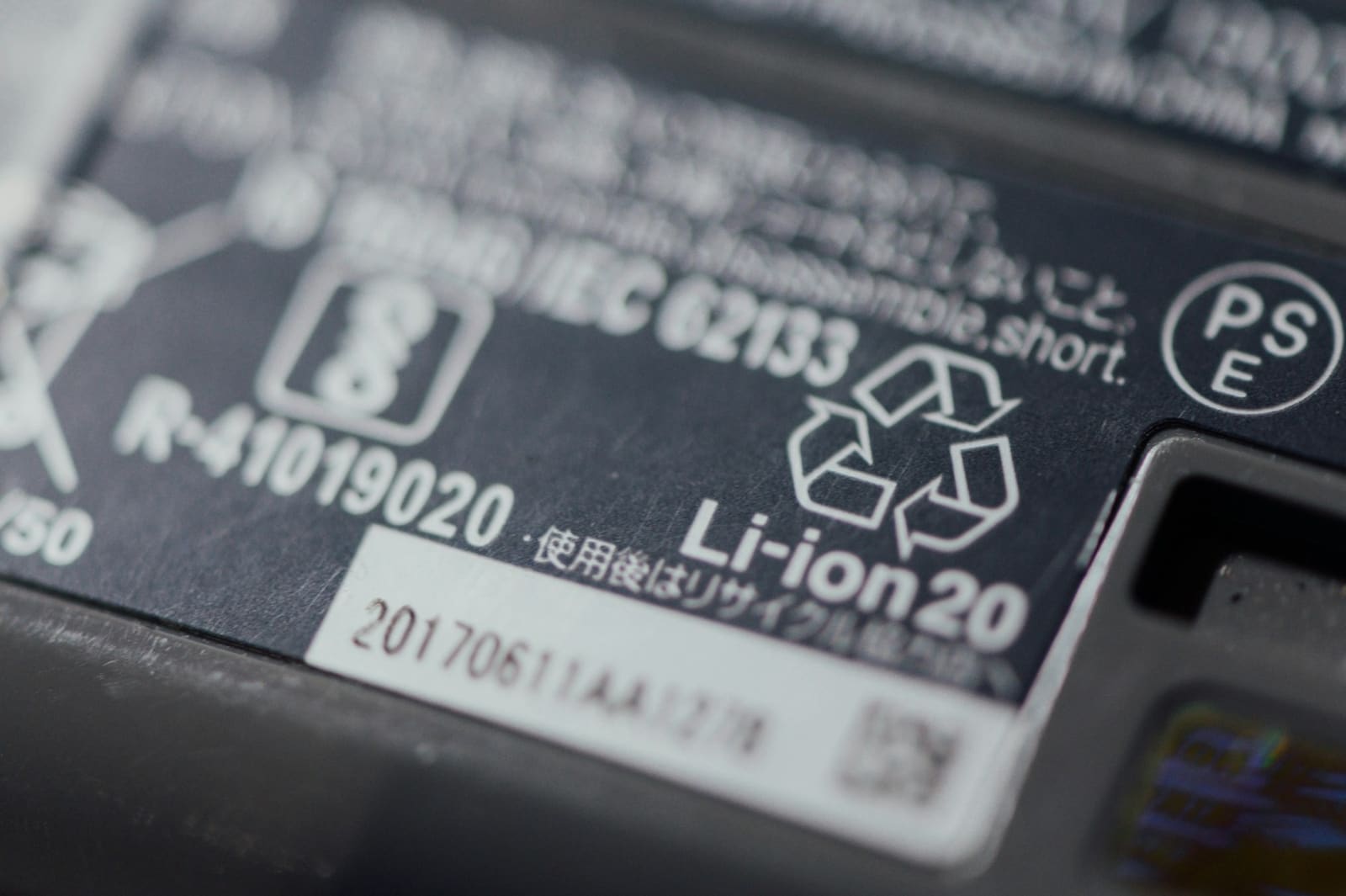
It is easy to assume that a used lithium-ion battery is a dead one. In practice, most scrap batteries still carry some charge, and a cell that has been dented, crushed or shorted can heat up quickly enough to catch fire. Fortunately, most of that risk can be managed with a handful of simple routines.
Below are the precautions we suggest to any business holding lithium-ion scrap, whether that means one carton of old phone batteries or several pallets of factory rejects.
Cover exposed terminals
Short circuits in storage usually start when a battery's terminals touch each other, a metal object or a conductive surface. Stop that from happening and you remove one of the biggest hazards.
- Tape over bare terminals and connectors with insulating tape
- Put small batteries in their own bags wherever you can
- Keep loose batteries out of metal bins and drums
Keep damaged batteries apart
Batteries that are swollen, leaking, punctured, dented or scorched are more likely to fail. Store them away from intact batteries in their own non-combustible container, and mention them to your buyer before pickup, as they may need special packing.
Pick a suitable storage spot
- Somewhere cool and dry with good airflow
- Out of direct sun and well away from heaters or other heat sources
- Clear of anything flammable, such as stacked cardboard, solvents or fuel
- Sheltered from rain, standing water and damp
- Easy to reach, with clear access and nothing heavy piled on top
Choose sturdy, non-conductive containers
Use strong containers made from non-conductive material that won't collapse when stacked. Pack any gaps with non-conductive padding so the batteries can't slide around, rub together or pierce one another when the container is moved.
Label every container and keep a log
Mark each container with the type of battery, a rough weight and its condition, and keep a basic record of what you have in storage. A good log speeds up evaluation, makes pickups safer and leaves you with a clear paper trail.
Agree the details before anything leaves your site
Lithium batteries are classed as dangerous goods for transport, and damaged ones may come with extra rules. Settle packing, labelling and paperwork with your scrap buyer before the material is collected.
Have an emergency plan
Make sure everyone on site knows what to do if a battery begins to smoke, swell suddenly or ignite: move people away, raise the alarm and follow your fire-safety procedure. Keep the storage area clear so emergency services can get to it.
In short
Nearly every storage incident involving batteries can be avoided. Cover the terminals, separate damaged units, keep the area cool and tidy, and arrange collection in good time. If you're not sure how to prepare a particular lot, ask our team before pickup and we'll advise.
This article offers general information only and should not be taken as legal, safety or compliance advice. Always follow the regulations and guidance that apply to your own site and material.
Back to all articles